Traffic Signal Reconstruction

Share Traffic Signal Reconstruction on Facebook Share Traffic Signal Reconstruction on Twitter Share Traffic Signal Reconstruction on Linkedin Email Traffic Signal Reconstruction link

What is the Citywide Signal Reconstruction Project?

The Citywide Signal Reconstruction Project is an exciting investment in Baltimore's future, helping make our streets safer, more accessible, and easier for everyone to navigate. Through this project, we will modernize aging traffic signals and create new opportunities for people to cross the street safely.

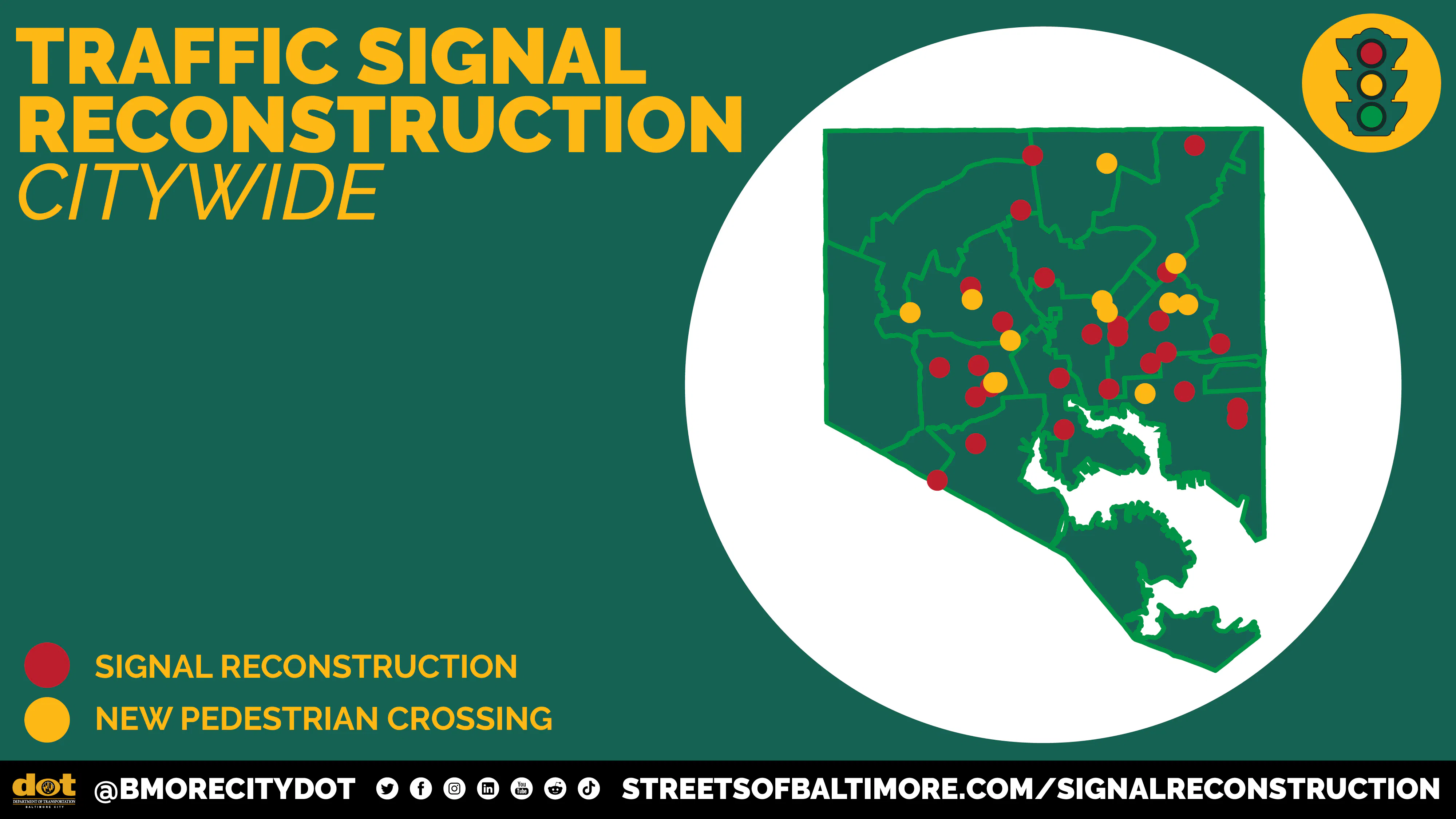
Over the course of the project, we will rebuild 27 traffic signals and add 12 new pedestrian crossings throughout the city. These improvements will make intersections safer, improve reliability, and support people walking, biking, driving, and using public transportation.

The traffic signal locations were selected because many of the existing signals are outdated and need upgrades. The work will be completed in three phases: first, 20 intersections; second, 7 intersections; and third, 12 new pedestrian crossings. The pedestrian crossing locations were identified based on pedestrian safety needs, crash history, and proximity to schools and recreational facilities. Together, these improvements will help create safer, more welcoming streets and strengthen connections across Baltimore neighborhoods.

What are the objectives of the project?

  • Rebuild old traffic signals so they work better and last longer.
  • Add new pedestrian crossings with bright flashing lights that warn drivers when someone is crossing.
  • Build curb ramps that meet the Americans with Disabilities Act, the law that makes sure people who use wheelchairs and other mobility devices can get around.
  • Add curb bump-outs, which are sidewalk corners that stick out a little so people have a shorter distance to walk when they cross.
  • Repaint crosswalks and street markings so they are easy to see.
  • Put up new and clearer signs.

Why is the work needed?

Many of these traffic signals have served our communities for many years and are ready for important upgrades. We selected these locations based on the age and condition of the existing equipment to bring safer, more reliable travel options to Baltimore.

New signals, improved ramps, and safer crossings will help make our streets more accessible and welcoming for everyone, whether you walk, roll, bike, drive, or ride transit. Enhanced pedestrian crossings, including Pedestrian Hybrid Beacons (PHBs) and Rectangular Rapid-Flashing Beacons (RRFBs), will provide clearer warnings to drivers and create safer crossings for all road users.

Where will the work happen?

The work will take place at locations citywide throughout Baltimore.

Traffic signals we will rebuild:

  • Armistead Way, Mapleton and Pulaski
  • Auchentoroly, Liberty Heights and McCulloh
  • Baltimore, Gilmor and Frederick
  • Belair Road at Chesterfield Avenue
  • Belair Road at Parkside Drive
  • Biddle and Washington
  • Boston and Gusryan
  • Broadway and Gough
  • Caton, James and Patapsco
  • Central and Preston
  • Charles Street at Northern Parkway
  • Coldspring and Keswick
  • Druid Hill and Gold
  • Eastern Avenue at Haven Street
  • Edison and Federal
  • Edmondson and Franklintown
  • Edmondson and Monroe
  • Gusryan and O'Donnell
  • Highland Avenue at Madison Street and Monument Street
  • Hollins Ferry, I-95 and Washington Boulevard
  • Howard and 29th
  • Lexington and St. Paul
  • Light Street at Ostend Street
  • Linwood and Orleans
  • Northern Parkway at Old Harford Road
  • Pratt and Payson
  • Washington and Gay and Oliver

New pedestrian crossings we will build:

  • The Alameda at Walters Avenue
  • Belair Road at Herring Run Trail
  • East North Avenue at North Regester Street
  • Eastern Avenue at South Lakewood Avenue
  • Erdman Avenue at Ravenwood Avenue
  • Garrison Boulevard at Windsor Avenue
  • Harford Road at Cliftview Avenue
  • Pennsylvania Avenue at Pitcher Street
  • Reisterstown Road at Bryant Avenue
  • Sinclair Lane at Chesterfield Avenue
  • West Fayette Street at Calhoun Street
  • West Fayette Street at Stricker Street

What will the improvements look like?

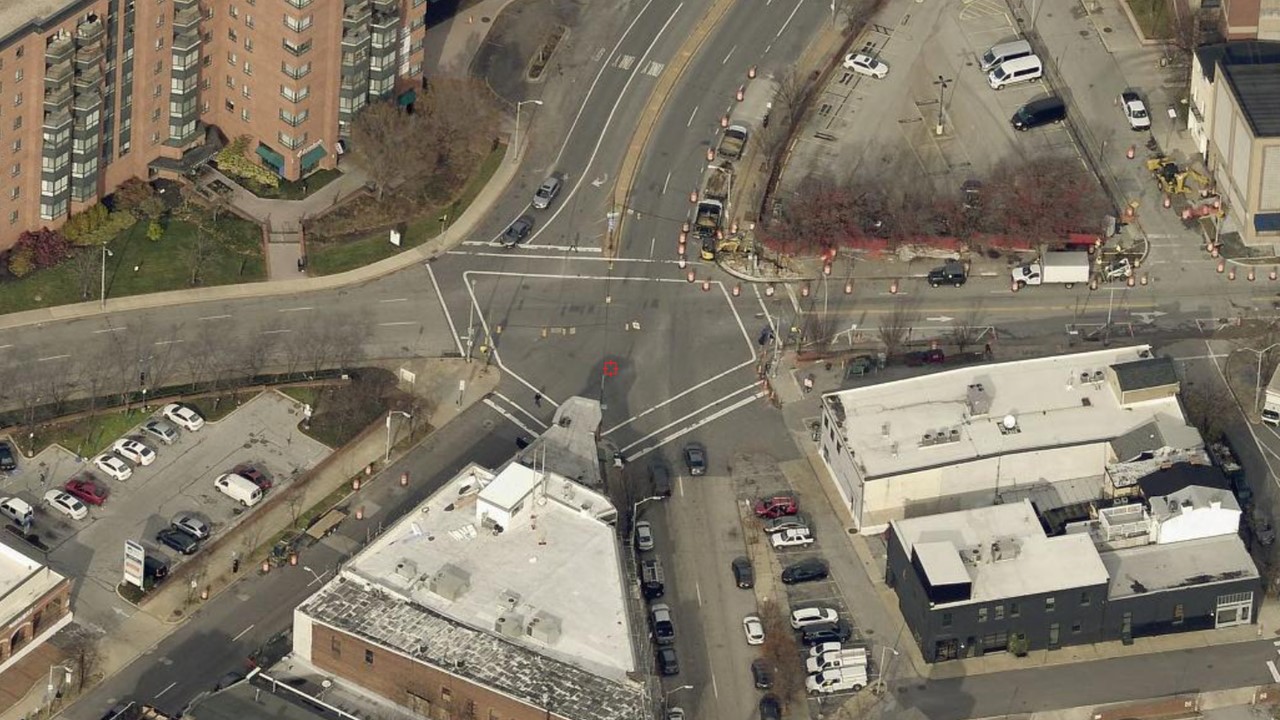
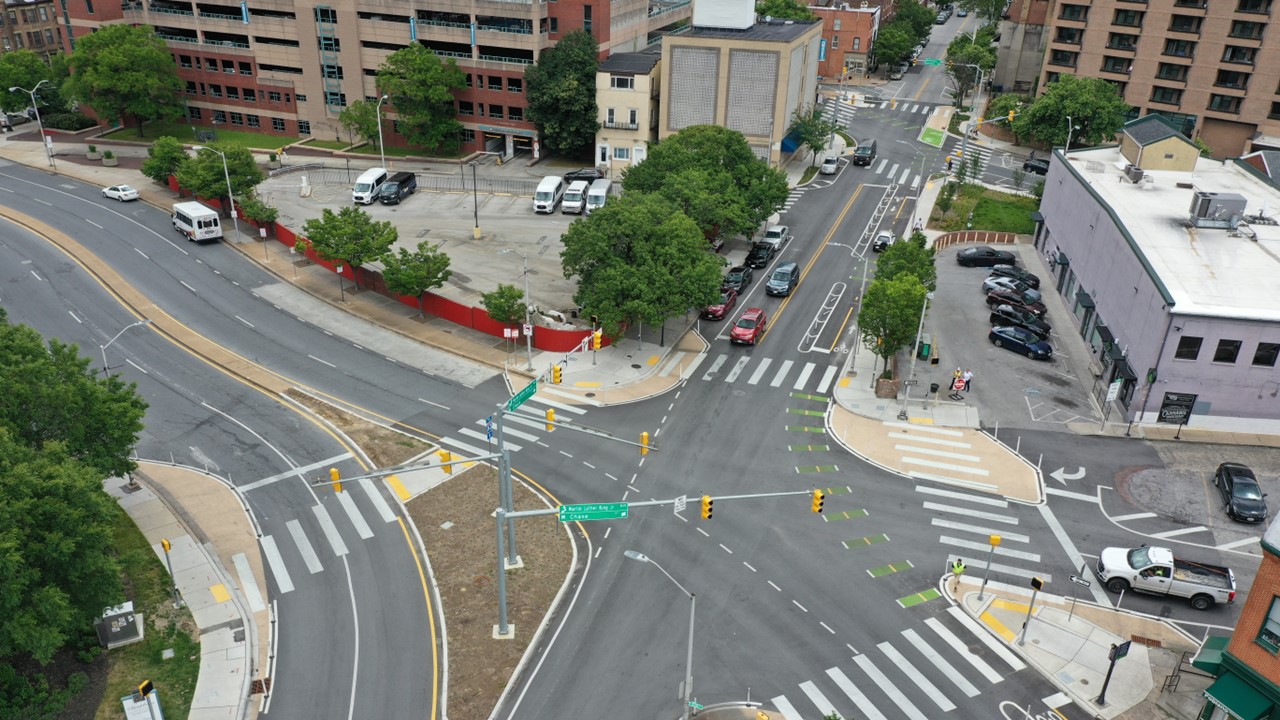
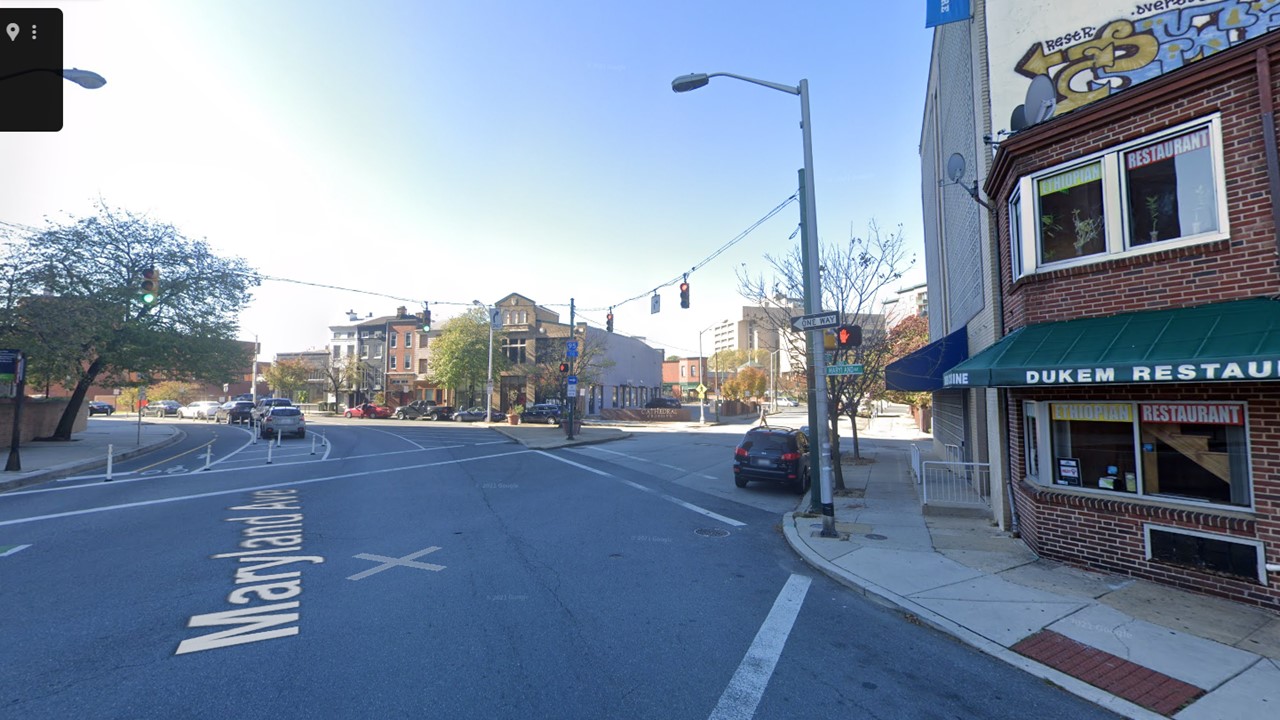
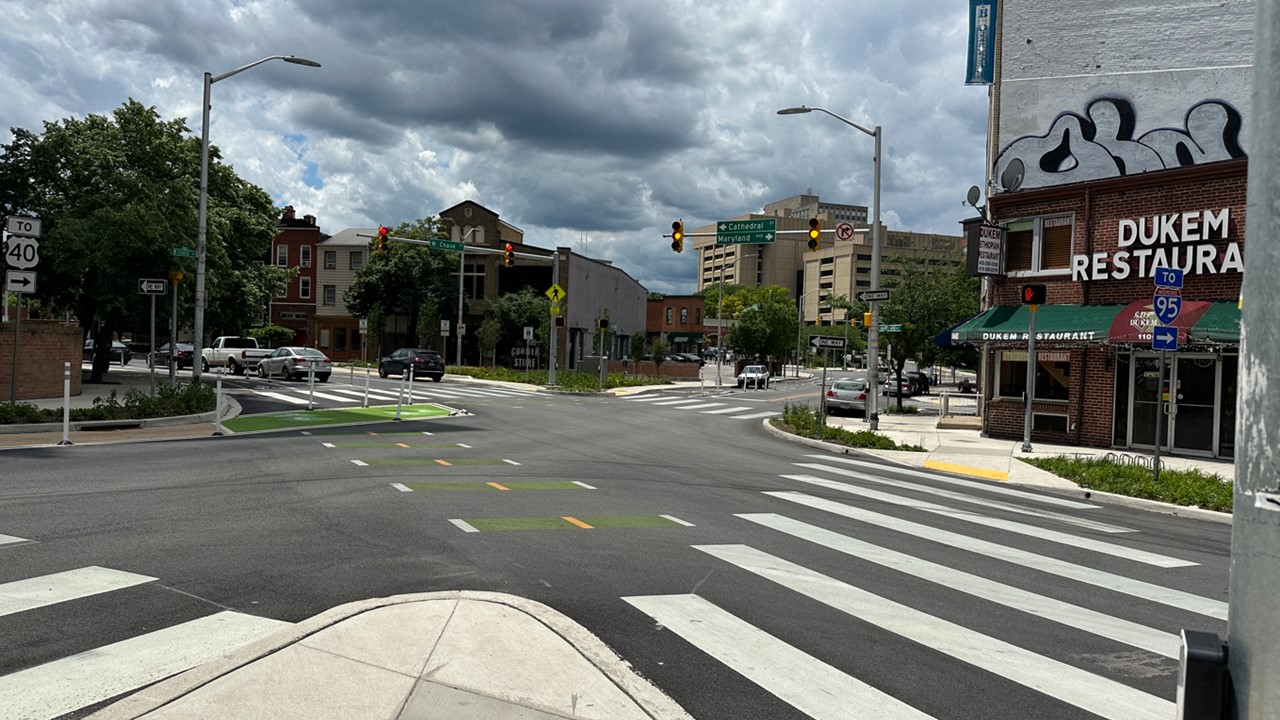
Here is an example of recently Completed Signal Upgrade Projects

MLK@Chase St Intersection (Before)MLK@Chase St Intersection (After)
Chase St & Cathedral St Intersection (Before)Chase St & Cathedral St Intersection (After)

What is a PHB?

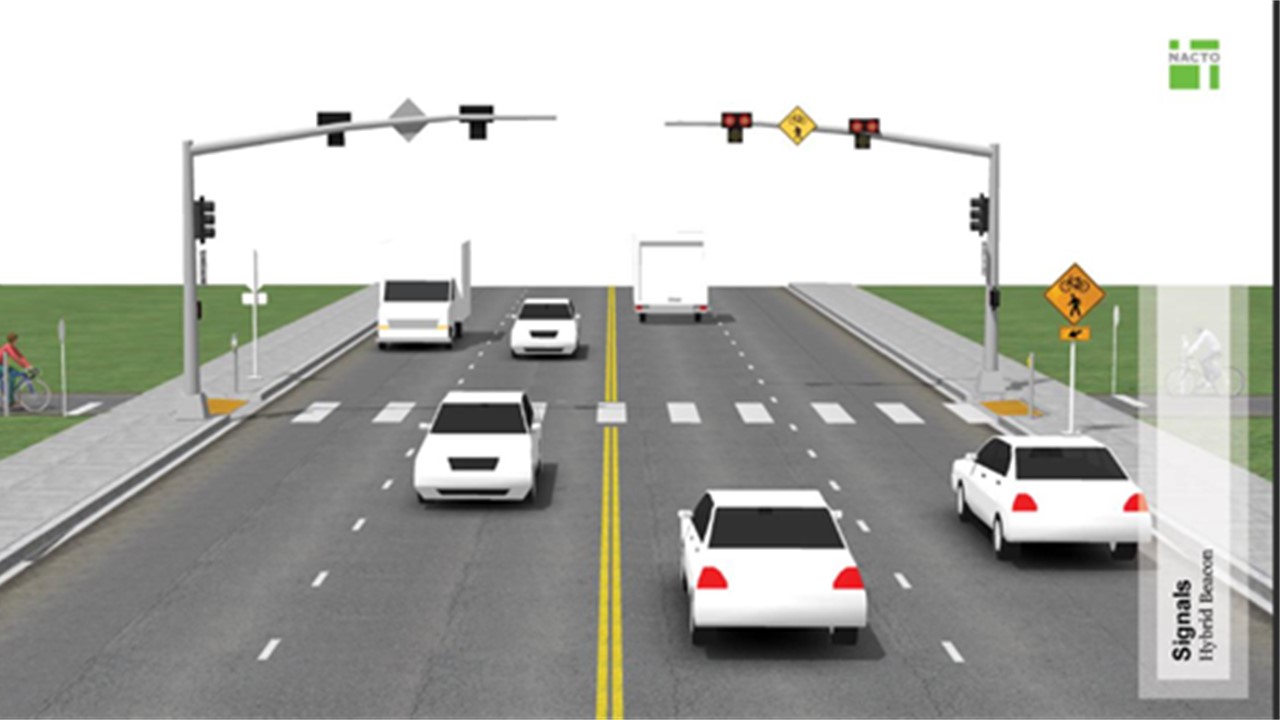
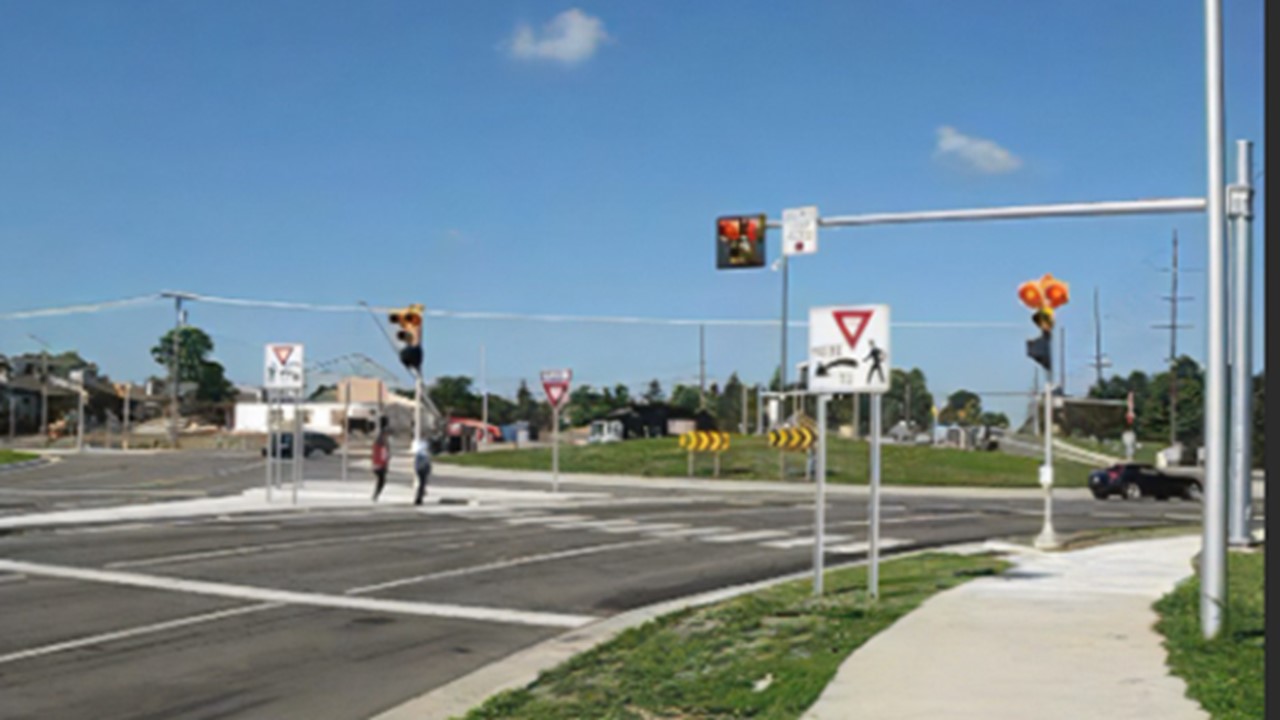
Pedestrian Hybrid Beacons PHB: Traffic control device designed to help pedestrians safely cross higher-speed roadways at midblock crossings and uncontrolled intersections

When a pedestrian wants to cross, they simply press the call button. That starts a sequence of lights. First, it flashes yellow to warn drivers that someone is about to cross. Then it turns steady yellow, telling drivers to slow down and prepare to stop. Next, both red lights turn on, which means vehicles must stop completely, giving pedestrians the right-of-way to cross safely, like at a regular traffic signal. The PHB signal then goes to a flashing red pattern, during which a vehicle may proceed if the crosswalk is clear.

What is a RRFB?

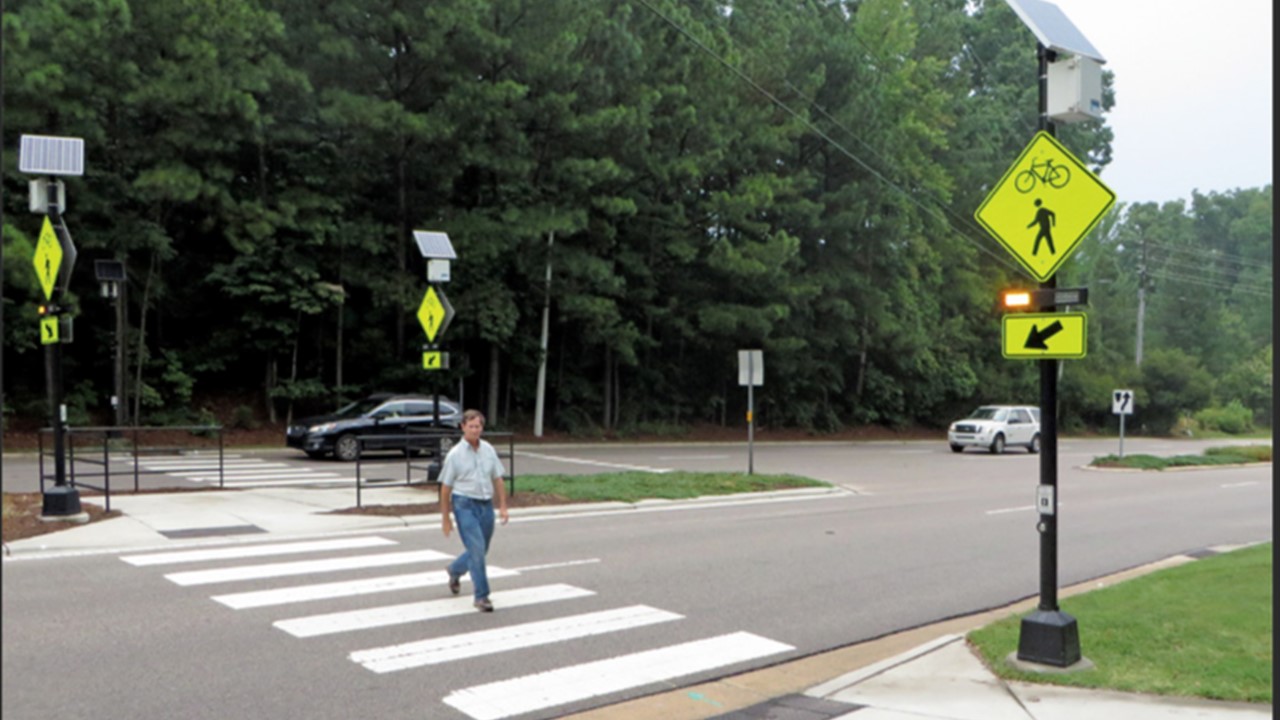
Rectangular Rapid Flashing Beacons (RRFB): Pedestrian warning sign designed to help pedestrians safely cross roadways

They are rectangular yellow lights; they flash rapidly when activated to alert drivers when a pedestrian is crossing.


What is the Citywide Signal Reconstruction Project?

The Citywide Signal Reconstruction Project is an exciting investment in Baltimore's future, helping make our streets safer, more accessible, and easier for everyone to navigate. Through this project, we will modernize aging traffic signals and create new opportunities for people to cross the street safely.

Over the course of the project, we will rebuild 27 traffic signals and add 12 new pedestrian crossings throughout the city. These improvements will make intersections safer, improve reliability, and support people walking, biking, driving, and using public transportation.

The traffic signal locations were selected because many of the existing signals are outdated and need upgrades. The work will be completed in three phases: first, 20 intersections; second, 7 intersections; and third, 12 new pedestrian crossings. The pedestrian crossing locations were identified based on pedestrian safety needs, crash history, and proximity to schools and recreational facilities. Together, these improvements will help create safer, more welcoming streets and strengthen connections across Baltimore neighborhoods.

What are the objectives of the project?

  • Rebuild old traffic signals so they work better and last longer.
  • Add new pedestrian crossings with bright flashing lights that warn drivers when someone is crossing.
  • Build curb ramps that meet the Americans with Disabilities Act, the law that makes sure people who use wheelchairs and other mobility devices can get around.
  • Add curb bump-outs, which are sidewalk corners that stick out a little so people have a shorter distance to walk when they cross.
  • Repaint crosswalks and street markings so they are easy to see.
  • Put up new and clearer signs.

Why is the work needed?

Many of these traffic signals have served our communities for many years and are ready for important upgrades. We selected these locations based on the age and condition of the existing equipment to bring safer, more reliable travel options to Baltimore.

New signals, improved ramps, and safer crossings will help make our streets more accessible and welcoming for everyone, whether you walk, roll, bike, drive, or ride transit. Enhanced pedestrian crossings, including Pedestrian Hybrid Beacons (PHBs) and Rectangular Rapid-Flashing Beacons (RRFBs), will provide clearer warnings to drivers and create safer crossings for all road users.

Where will the work happen?

The work will take place at locations citywide throughout Baltimore.

Traffic signals we will rebuild:

  • Armistead Way, Mapleton and Pulaski
  • Auchentoroly, Liberty Heights and McCulloh
  • Baltimore, Gilmor and Frederick
  • Belair Road at Chesterfield Avenue
  • Belair Road at Parkside Drive
  • Biddle and Washington
  • Boston and Gusryan
  • Broadway and Gough
  • Caton, James and Patapsco
  • Central and Preston
  • Charles Street at Northern Parkway
  • Coldspring and Keswick
  • Druid Hill and Gold
  • Eastern Avenue at Haven Street
  • Edison and Federal
  • Edmondson and Franklintown
  • Edmondson and Monroe
  • Gusryan and O'Donnell
  • Highland Avenue at Madison Street and Monument Street
  • Hollins Ferry, I-95 and Washington Boulevard
  • Howard and 29th
  • Lexington and St. Paul
  • Light Street at Ostend Street
  • Linwood and Orleans
  • Northern Parkway at Old Harford Road
  • Pratt and Payson
  • Washington and Gay and Oliver

New pedestrian crossings we will build:

  • The Alameda at Walters Avenue
  • Belair Road at Herring Run Trail
  • East North Avenue at North Regester Street
  • Eastern Avenue at South Lakewood Avenue
  • Erdman Avenue at Ravenwood Avenue
  • Garrison Boulevard at Windsor Avenue
  • Harford Road at Cliftview Avenue
  • Pennsylvania Avenue at Pitcher Street
  • Reisterstown Road at Bryant Avenue
  • Sinclair Lane at Chesterfield Avenue
  • West Fayette Street at Calhoun Street
  • West Fayette Street at Stricker Street

What will the improvements look like?

Here is an example of recently Completed Signal Upgrade Projects

MLK@Chase St Intersection (Before)MLK@Chase St Intersection (After)
Chase St & Cathedral St Intersection (Before)Chase St & Cathedral St Intersection (After)

What is a PHB?

Pedestrian Hybrid Beacons PHB: Traffic control device designed to help pedestrians safely cross higher-speed roadways at midblock crossings and uncontrolled intersections

When a pedestrian wants to cross, they simply press the call button. That starts a sequence of lights. First, it flashes yellow to warn drivers that someone is about to cross. Then it turns steady yellow, telling drivers to slow down and prepare to stop. Next, both red lights turn on, which means vehicles must stop completely, giving pedestrians the right-of-way to cross safely, like at a regular traffic signal. The PHB signal then goes to a flashing red pattern, during which a vehicle may proceed if the crosswalk is clear.


What is a RRFB?

Rectangular Rapid Flashing Beacons (RRFB): Pedestrian warning sign designed to help pedestrians safely cross roadways

They are rectangular yellow lights; they flash rapidly when activated to alert drivers when a pedestrian is crossing.


Questions and Comments

Email
loader image
Didn't receive confirmation?
Seems like you are already registered, please provide the password. Forgot your password? Create a new one now.
Page published: 23 Jun 2026, 12:08 PM