Share Harford Road Hardening Phase II on FacebookShare Harford Road Hardening Phase II on X (formerly Twitter)Share Harford Road Hardening Phase II on LinkedinEmail Harford Road Hardening Phase II link
Where is this project?
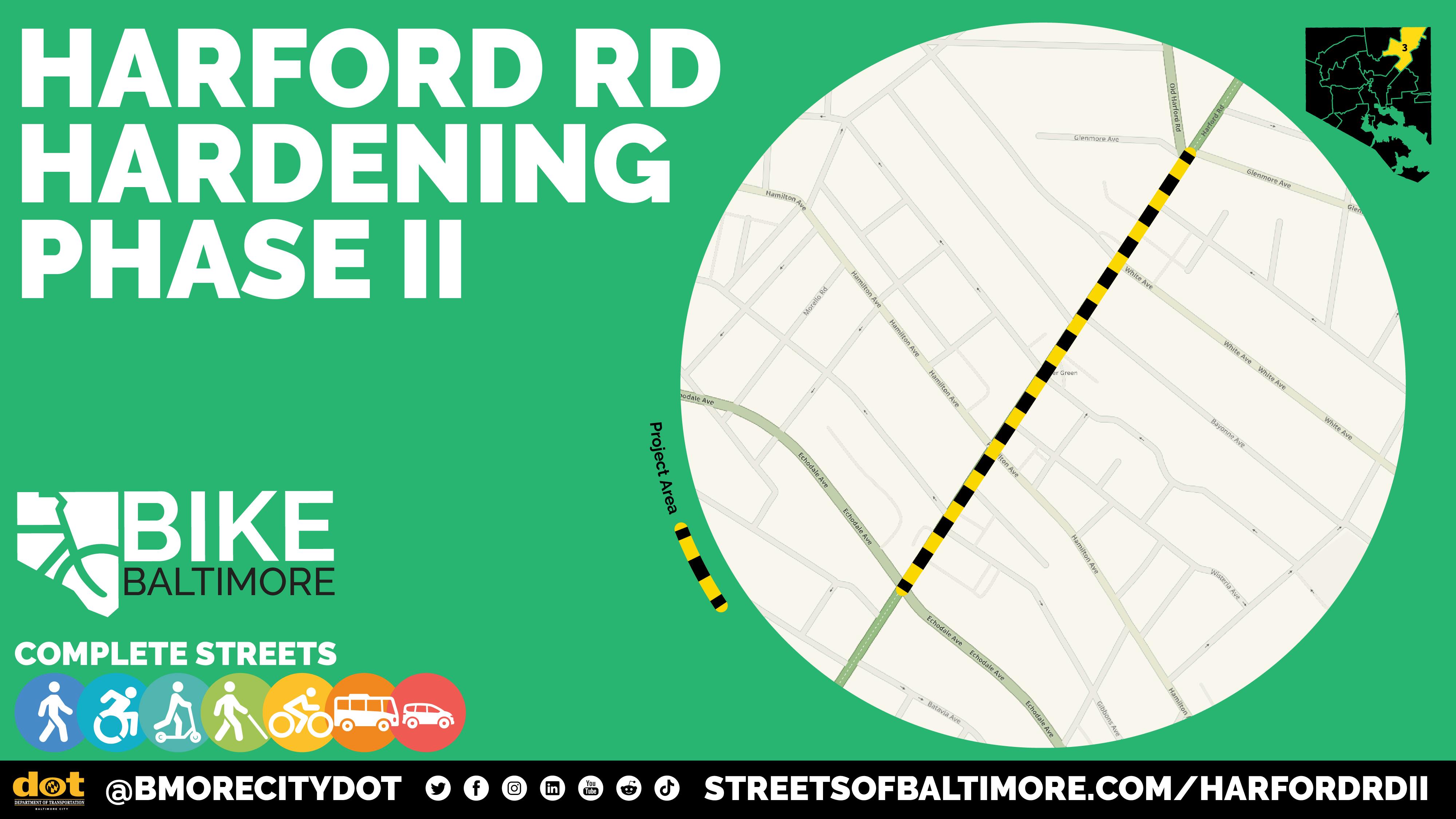
This project covers a 0.6-mile segment of Harford Road between Glenmore Avenue and Echodale Avenue in northeast Baltimore.
What improvements are being made?
We are upgrading the existing quick-build bike lane—originally installed with paint and flexible delineator posts—into a permanent, safer configuration. The project will add bus islands with curbside separated bike lanes and concrete bus stop pads, improving comfort and safety for people biking and riding transit.
Where will the new bus islands be located?
Four new bus stop islands will be installed at the following locations on Harford Road:
At Echodale Avenue, heading toward downtown, just before the intersection
At White Avenue, heading away from downtown, just before the intersection
At White Avenue, heading toward downtown, just before the intersection
At Glenmore Avenue, heading away from downtown, just before the intersection
What is a bus stop island?
A bus stop island is a raised platform between the bike lane and the travel lane where passengers wait for and board the bus. The bus stops in the travel lane while passengers use the island to safely board and exit.
To reach the bus stop island from the sidewalk, passengers will cross the bike lane using a designated crossing designed to be safe and accessible for pedestrians of all ages and abilities.
Adjacent to each island, durable concrete pads will be installed in the roadway where buses stop. These concrete pads are stronger than regular asphalt and prevent road damage from the weight of buses repeatedly stopping in the same location.
Why is this project important?
These improvements continue our Complete Streets commitment; designing streets that are safe and accessible for everyone, no matter how they travel. By replacing temporary materials with permanent infrastructure, we are creating a more comfortable and reliable experience for both cyclists and bus riders along a key corridor.
Where is this project?
This project covers a 0.6-mile segment of Harford Road between Glenmore Avenue and Echodale Avenue in northeast Baltimore.
What improvements are being made?
We are upgrading the existing quick-build bike lane—originally installed with paint and flexible delineator posts—into a permanent, safer configuration. The project will add bus islands with curbside separated bike lanes and concrete bus stop pads, improving comfort and safety for people biking and riding transit.
Where will the new bus islands be located?
Four new bus stop islands will be installed at the following locations on Harford Road:
At Echodale Avenue, heading toward downtown, just before the intersection
At White Avenue, heading away from downtown, just before the intersection
At White Avenue, heading toward downtown, just before the intersection
At Glenmore Avenue, heading away from downtown, just before the intersection
What is a bus stop island?
A bus stop island is a raised platform between the bike lane and the travel lane where passengers wait for and board the bus. The bus stops in the travel lane while passengers use the island to safely board and exit.
To reach the bus stop island from the sidewalk, passengers will cross the bike lane using a designated crossing designed to be safe and accessible for pedestrians of all ages and abilities.
Adjacent to each island, durable concrete pads will be installed in the roadway where buses stop. These concrete pads are stronger than regular asphalt and prevent road damage from the weight of buses repeatedly stopping in the same location.
Why is this project important?
These improvements continue our Complete Streets commitment; designing streets that are safe and accessible for everyone, no matter how they travel. By replacing temporary materials with permanent infrastructure, we are creating a more comfortable and reliable experience for both cyclists and bus riders along a key corridor.
Thank you for your contribution!
Help us reach out to more people in the community
Share this with family and friends