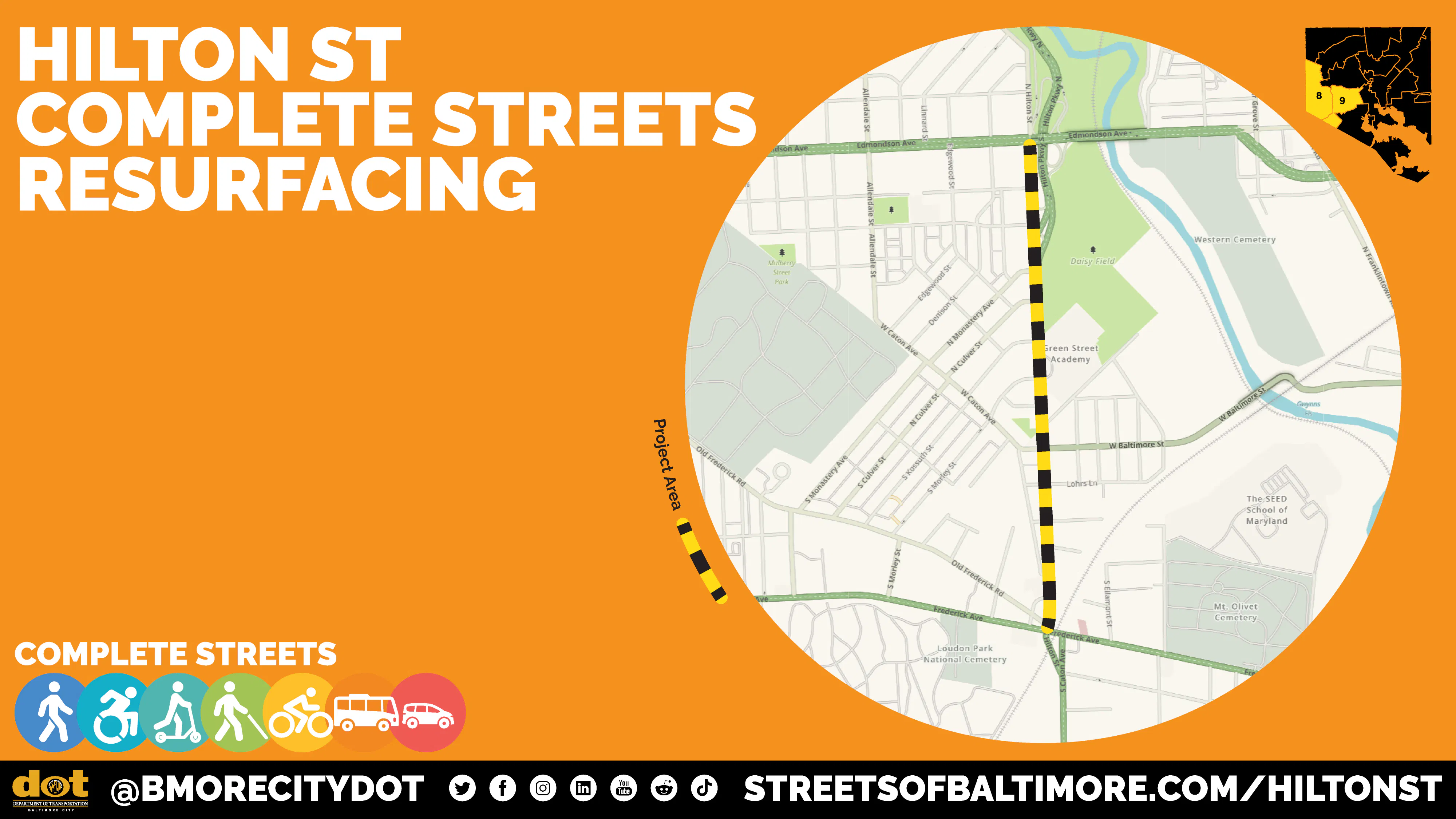
FAQs
DOT has completed two speed studies along the corridor that show an 85th percentile speed of 40mph which is 15mph above the posted 25mph. In the event of a pedestrian involved crash, vehicle speeds of 40mph or over possess and aggregate 80% chance of resulting in a fatality.
DOT has analyzed recent crash data. For 2024 alone, there were 53 total crashes and 3 of them involved children or other vulnerable road users.
DOT has analyzed recent e-scooter and e-bike data which show that there are over 8 average trips daily occurring near the school which point to this being a destination people need to travel to/from via bikes and scooters.
DOT has conducted traffic analysis for both AM and PM peak conditions along Hilton St. This data shows that the proposed design concept (1 permanent parking lane, 1 northbound travel lane, and 1 southbound travel, and 1 two-way protected bikeway) from Baltimore to Monetary will maintain current traffic flow levels.
DOT has conducted two parking studies along the corridor. Both studies found current utilization to be 6% to 7%. Based on community feedback BCDOT will conduct an additional study at an alternate time to verify utilization.
What is the timeline for engagement? Who will be engaged as part of the process?
Engagement for the Hilton St Complete Streets Resurfacing Project started in July 2026 and is anticipated to go through September. During this time DOT is reaching out to adjacent community associations, school, and businesses.
How will community input be incorporated into the project design?
Community feedback is currently being collected for the Hilton St Complete Streets Resurfacing Project. If the project team receives feedback that can feasibly be incorporated into the concept design, we will do that. The concept design follows the Complete Streets guidance outlined in the City Code. The two-way protected bikeway is included in the design as it is a recommended facility in the Separated Bike Lane Network plan. Learn more about the engagement and development of the plan here.
How has safety, traffic, parking, and micromobility been considered in the concept design?